
Digital eye strain remote workers face is a common hidden health issue. Remote work has become the new normal for millions of people worldwide. While working from home offers flexibility and comfort, it also creates hidden eye health challenges that traditional office environments rarely produce.Without structured breaks, fixed working hours, or natural office movement, remote workers tend to stare at screens for hours continuously, leading to persistent digital eye strain, heavy eyeballs, dry eyes, and screen-related headaches.
According to the American Optometric Association(AOA), prolonged close-screen viewing is the leading cause of modern computer vision syndrome. Most remote workers rely only on passive rest methods such as closing their eyes or looking far away for a few seconds. While these methods offer temporary relief, they cannot fix stiff ciliary muscles and restricted extraocular muscle movement caused by all-day screen fixation.
In this guide, we share a scientific 5-minute daily eye training routine specifically designed for remote workers. By combining near-far accommodation training and figure-eight ocular muscle training, you can actively relax your eye muscles, restore natural eye flexibility, and eliminate cumulative screen fatigue.
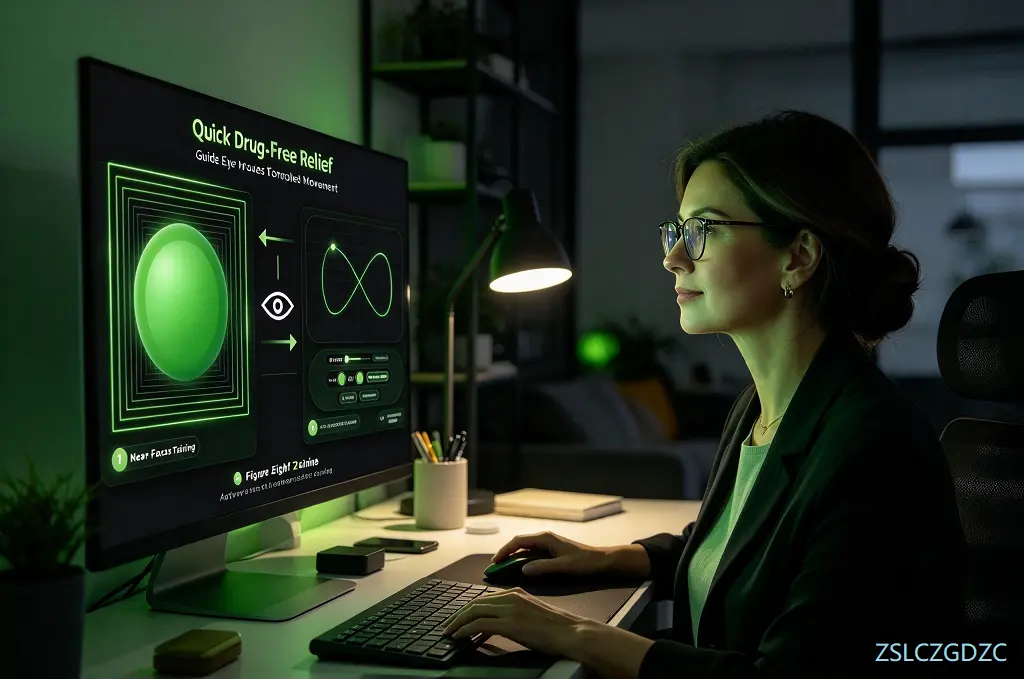
Table of Contents
What Causes Digital Eye Strain Remote Workers Experience?
Unbroken Screen Sessions With No Formal Break Schedule
At home, there are no office shift changes, no colleague interactions, and no fixed break times. Many remote workers stay glued to their monitors for 3–5 hours straight without pausing. This forces the eye’s ciliary muscle to remain contracted continuously, gradually losing elasticity and causing chronic eye fatigue.The American Optometric Association shares guidance about screen-related vision issues for office staff.
Poor Home Workstation Ergonomics
Most home workspaces are not optimized for eye health. Improper screen height, unstable lighting, unadjusted brightness, and sitting too close to screens all increase visual pressure and reduce natural blinking frequency, resulting in dry eyes and blurred vision.
Limited Natural Eye Movement Indoors
Working in a single room all day restricts your field of vision. Your eyes stay locked in a narrow near-focus range, leaving extraocular muscles stiff and underworked. Over time, this creates the heavy, tired eye feeling familiar to most remote employees.
Passive Rest vs Active Eye Muscle Training: Key Differences
Limitations of Closing Eyes and Basic 20-20-20 Rule
Traditional eye rest only provides surface-level relaxation. Closing your eyes does not stretch frozen eye muscles. Similarly, the classic 20-20-20 rule only offers passive static relaxation. It cannot rebuild ciliary muscle flexibility or improve eyeball mobility.
How Dual Muscle Training Solves Root-Cause Eye Strain
Your vision relies on two core muscle groups:
- Ciliary muscles control focusing ability and near-far switching
- Extraocular muscles control all eyeball movement, rotation, and flexibility
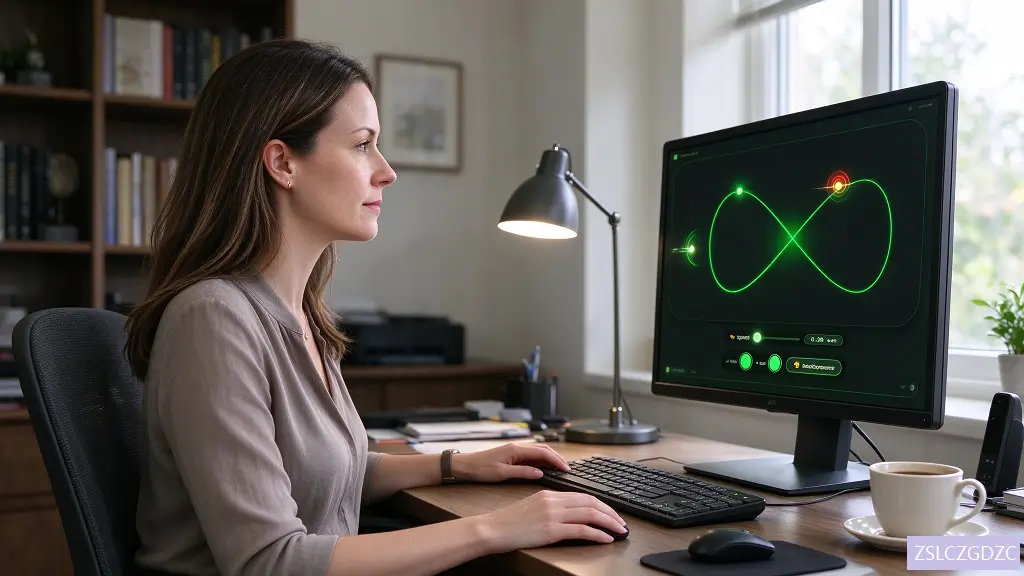
Our paired training system actively exercises both groups. The Near-Far Ocular Accommodation Trainer relaxes deep ciliary muscle tension, while the ∞ Figure Eight Ocular Muscle Trainer stretches stiff eye movement muscles. Together, they deliver complete eye recovery that passive rest cannot match.
5-Minute Daily Eye Training Routine for Remote Workers
Morning Pre-Work Activation (1 Minute)
Start your workday with the Near-Far Trainer. This quick session wakes up your ciliary muscles, improves initial focusing flexibility, and prevents early-morning screen strain before it builds up.
Midday Deep Relief Break (2 Minutes)
At noon, follow the scientifically verified sequence:
- Step 1: Near-Far training to release ciliary muscle spasm
- Step 2: Figure Eight training to restore full eyeball mobility
This inside-out training order delivers maximum relief during your busiest working hours. It follows the official full-spectrum eye care routine introduced in our pillar eye care guide.
Post-Work Eye Relaxation (1 Minute)
Finish your workday with gentle figure-eight tracking movement to eliminate accumulated ocular tension, reduce eye heaviness, and help your eyes fully recover overnight.
Simple Home Workstation Tweaks to Reduce Baseline Fatigue
- Keep your screen slightly below eye level to reduce eye opening area and slow tear evaporation
- Adjust room lighting to avoid screen glare and harsh contrast
- Practice conscious full blinking every few minutes to relieve dryness
Frequently Asked Questions
How often should remote workers practice eye muscle training?
For digital eye strain remote workers, 2 to 3 short sessions per day, 1–2 minutes each, is enough to maintain consistent eye muscle flexibility and prevent cumulative strain.
Can this routine relieve screen-related headaches?
Yes. Many screen headaches originate from sustained eye muscle tension. Regular active training reduces ocular pressure and effectively alleviates tension-type visual headaches.
Is the eye trainer compatible with laptops and smart TVs?
Both web-based tools work on all browser-accessible devices including laptops, desktops, tablets, and smart TVs. No downloads or installation required.
Final Thoughts
Digital eye strain remote workers deal with is not unavoidable. With a simple, consistent 5-minute daily training routine, you can transform passive eye rest into active muscle maintenance. Protect your vision, reduce fatigue, and maintain long-term eye comfort throughout your remote working career.
[…] If you are a remote worker suffering from screen fatigue, check our guide about 5-minute eye muscle training routine for remote workers. […]
[…] Remote and office workers — see our 5-minute eye training routine for remote workers […]