
Heavy eyes after screen time is one of the most common complaints among office workers, students and anyone spending long hours staring at laptops, tablets and smartphones. Many people experience heavy, droopy, and tired eyes after hours of laptop and phone use. This common screen-related symptom is often mistaken for sleepiness, but it is usually a clear sign of unresolved digital eye strain. If your eyes feel heavy after screen time, passive resting alone rarely fixes the root muscular tension.
Table of Contents
What Causes Heavy Eyes After Screen Time?
Heavy screen eyes are caused by prolonged near-focus contraction and stiff extraocular muscles. When you stare at screens for hours, your eye muscles remain locked in one position, leading to fatigue, pressure, and a heavy, exhausted feeling. According to the American Optometric Association, sustained near-work tension is the leading cause of post-screen eye heaviness.
You may notice this symptom most at the end of a workday: your eyelids feel weighted, you struggle to keep your eyes open, and simple tasks like reading text require extra effort. This is not just tiredness from lack of sleep; your ciliary and gaze muscles are stuck in a contracted state. This heavy eyes after screen time sensation can get worse day after day without proper muscle release.
Why Simply Closing Your Eyes Won’t Fully Relieve Heavy Eyes After Screen Time
Closing your eyes gives temporary rest, but it does not actively stretch and release tight eye muscles. The muscles remain tense until you guide them through controlled movement and focus shifts. This is why many people still feel heavy eyes even after a short nap. Simple rest only pauses the strain; it cannot reset overworked eye muscles that create heavy eyes after screen time.
Quick Drug-Free Relief for Heavy Screen Eyes
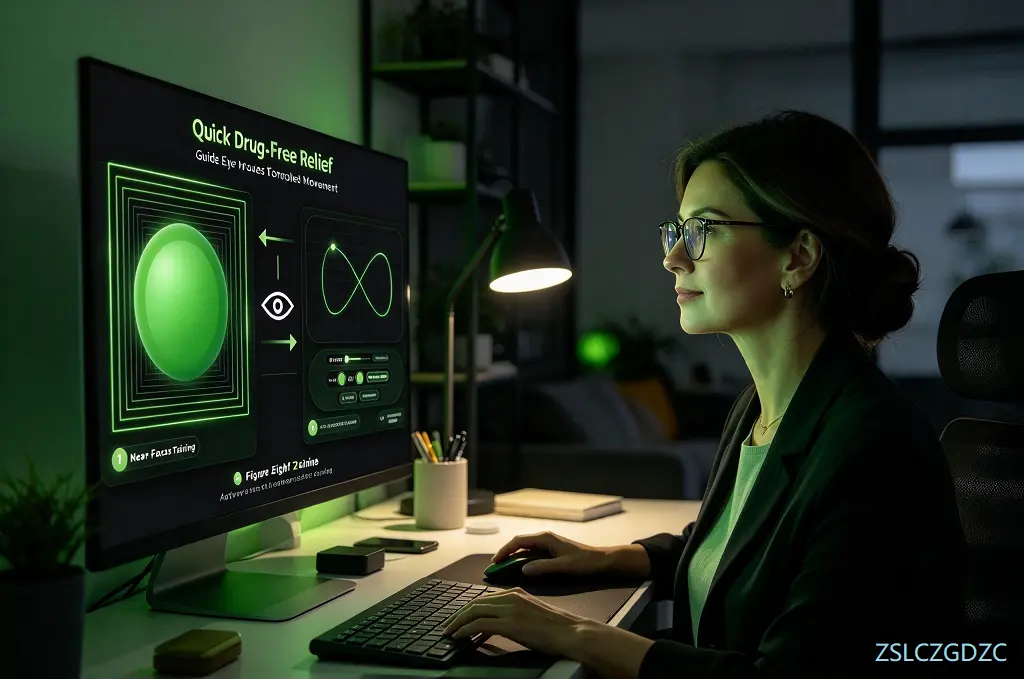
Short, guided eye muscle training helps release accumulated tension far faster than closing your eyes or resting. Our Near-Far Ocular Accommodation Trainer relaxes overworked ciliary muscles, while the ∞ Figure Eight Ocular Muscle Trainer loosens stiff gaze muscles that cause heavy, tired eyes. These tools target the exact muscle tension responsible for heavy eyes after screen time.
Pair this training with the 20-20-20 rule throughout your workday to stop tension from building up in the first place. Every 20 minutes, look 20 feet away for 20 seconds to interrupt near-focus contraction before heavy eyes after screen time sets in.
Daily Habits to Prevent Heavy Eye Fatigue From Screens
- Blink consciously every time you pause reading on screen
- Adjust screen height to keep your gaze slightly downward
- Take short breaks before eye heaviness appears, not after
- Add 2–3 minutes of eye muscle training at the end of your screen session
When Heavy Eyes After Screen Time Is More Than Digital Strain
Most of the time, heavy eyes after screen time comes from tired eye muscles. But some symptoms signal underlying vision issues. If you regularly experience heavy eyes paired with blurry vision, persistent headaches or sharp eye pain, it may be time for a professional eye exam. Uncorrected refractive errors like nearsightedness can amplify heavy eyes after screen time dramatically.
Disclaimer
These eye training tools are wellness aids, not medical devices. For persistent eye heaviness, eye pain, sudden vision changes or ongoing discomfort, consult a licensed optometrist. Read more about digital eye strain from AOA.