
Many office workers and students experience temporary blurry vision after computer work. This screen-related blur often makes distant objects unclear and slows visual focusing — a classic symptom of digital eye strain. Some people worry they have developed permanent vision loss, but in most cases, this symptom is reversible.
Millions of desk workers, programmers and online students deal with blurry vision after hours staring at laptop and desktop monitors. This visual fog usually kicks in at the end of a long workday, making road signs, whiteboards and distant text hard to read. Many people assume their eyesight is getting worse permanently, but this form of digital eye strain is often temporary.
Table of Contents
Why Screens Cause Temporary Blurry Vision
Prolonged near-screen work locks the ciliary muscle in a contracted state. When you finally look away into the distance, the muscle cannot relax instantly, resulting in delayed focus and temporary blurred distance vision. The American Optometric Association confirms this condition as screen-induced accommodative spasm.
This temporary focusing issue is sometimes called screen pseudomyopia. It happens because your eye muscles “forget” how to switch between near and far focus after hours of close viewing.
Why Passive Rest Is Slow to Help
Simply staring out the window for a few seconds may not release accommodative spasm quickly. The muscle needs guided, repeated shifts between near and far focus to regain flexibility.
How to Fix Blurry Vision After Computer Work
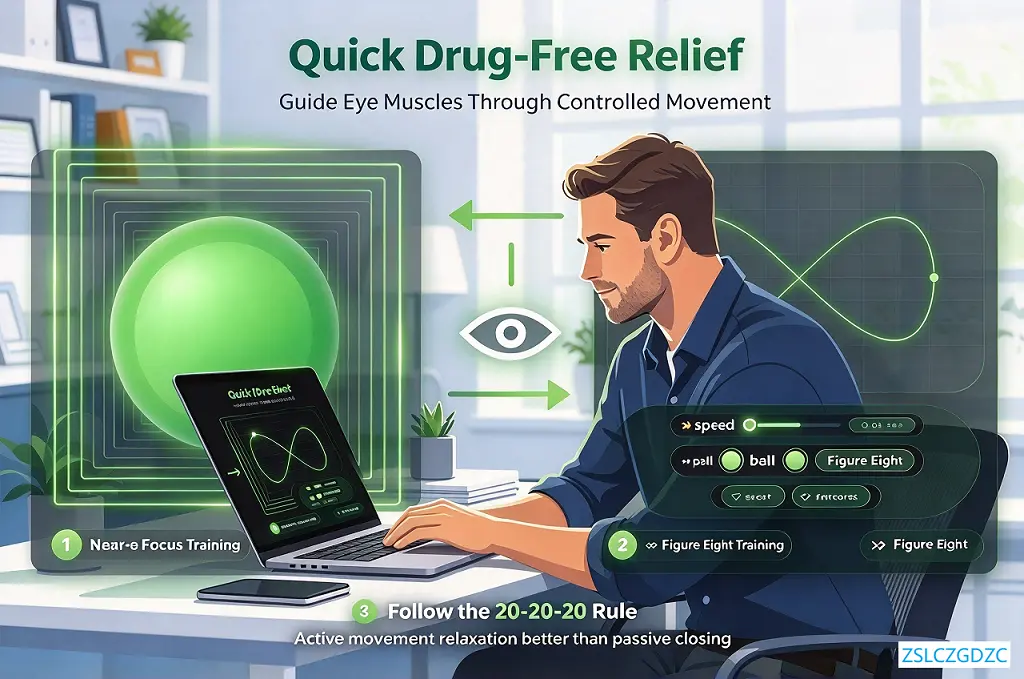
The famous 20-20-20 rule is the most widely recommended baseline habit for anyone facing blurry vision after computer work. Every 20 minutes, look at an object at least 20 feet away for 20 full seconds. This simple habit prevents ciliary muscle spasm from building up before your vision starts to blur.
You should also check your workstation setup. Screen brightness matching room lighting reduces extra eye fatigue. Keep your monitor slightly below eye level to reduce eyelid opening size and slow tear evaporation, which also worsens visual discomfort.
Passive rest alone is slow for releasing muscle spasms. Active guided training resets your eye focus efficiently. Our Near-Far Ocular Accommodation Trainer guides your eyes through controlled near and far focus cycles to release spasms and restore flexible vision.
Remote workers can combine this routine with tips from our remote worker eye strain guide for all-day eye comfort.
When Blurry Vision Needs Professional Help
If blurred vision lasts for hours or occurs without screen use, consult an eye doctor. Temporary screen blur is reversible, but persistent symptoms may indicate uncorrected vision issues or other eye conditions.
Disclaimer
Our eye training tools are wellness aids and not medical devices. They help exercise eye muscles and ease screen fatigue, and cannot cure eye diseases or refractive errors. Visit AOA for more details on computer vision syndrome.
Frequently Asked Questions
Why do I get blurry vision after computer work?
Blurry vision after computer work is usually caused by accommodative spasm, a key symptom of digital eye strain. Long hours of near-screen work keeps your eye’s ciliary muscle contracted. When you look at distant objects, the muscle cannot relax quickly, creating temporary blurred vision, also known as screen pseudomyopia.
Is blurry vision from computer work permanent?
In most cases, blurry vision after computer work is temporary and reversible. If blurred vision lasts many hours or appears without screen time, schedule an eye exam with an optometrist to rule out other eye problems.
Does the 20-20-20 rule help blurry vision after computer work?
Yes. The 20-20-20 rule is a simple prevention method. Every 20 minutes, look at something 20 feet away for 20 seconds. It reduces ciliary muscle tension and helps stop blurry vision from building up during long computer sessions.
How can I quickly fix blurry vision after working on my computer?
Simple active near-far focus training works better than passive rest. Guide your eyes to repeatedly shift focus between near and far objects to release tight ciliary muscles. Adjust your monitor height and brightness to reduce ongoing eye fatigue.
When should I see an eye doctor for blurry vision?
Seek professional eye care if blurry vision lasts for several hours, happens even without screen use, or comes with pain, double vision or frequent headaches. These signs may indicate underlying vision issues beyond digital eye strain.
[…] Temporary blurry vision after computer use: common causes and practical fixes […]
[…] Temporary blurry vision after computer use: common causes and practical fixes […]