
Screen glare eye strain is one of the most overlooked triggers of digital eye strain. Bright reflections from windows, overhead lights, or shiny monitor surfaces force your eyes to constantly adjust and strain, even if you do not immediately notice the glare. Over time, this subtle visual burden builds into sore eyes and tension headaches. Many people dismiss mild discomfort, but long-term exposure leaves your ocular muscles tight after every screen session.
Table of Contents
What Is Screen Glare Eye Strain?
Screen glare eye strain is a subtype of digital eye fatigue caused by reflected light on your display. Unlike blurry vision, glare creates competing light signals that your eyes must filter nonstop. This constant visual correction keeps your eye muscles working overtime, leading to tired eyes, dryness, and recurring headaches after long hours at monitors or laptop screens.
Who Is Most At Risk For Glare-Related Eye Fatigue?
Anyone spending 6+ hours daily in front of screens can develop glare-induced eye strain. Remote workers, programmers, graphic designers, and online students are especially vulnerable. Graphic designers using glossy high-color displays often struggle the most, since bright reflections interfere with color accuracy while tiring the eyes faster. People with uncorrected mild refractive issues will notice symptoms even quicker when screen glare is present.
Symptoms may build gradually over weeks, so many users never connect their daily headaches and dry eyes to simple screen reflections in their workspace.
How Glare Creates Hidden Eye Muscle Fatigue
When glare hits your screen, your eyes must continuously fine-tune focus to filter reflections and read text clearly. These tiny, constant adjustments keep extraocular muscles under low-level persistent stress. Unlike obvious screen fatigue, glare strain creeps in slowly throughout your workday. Most users do not realize that the dull eye ache at the end of the day comes directly from untreated glare on their display.
The American Optometric Association AOA lists screen reflections and glare as a key environmental risk factor for computer vision syndrome, including this form of digital eye fatigue.
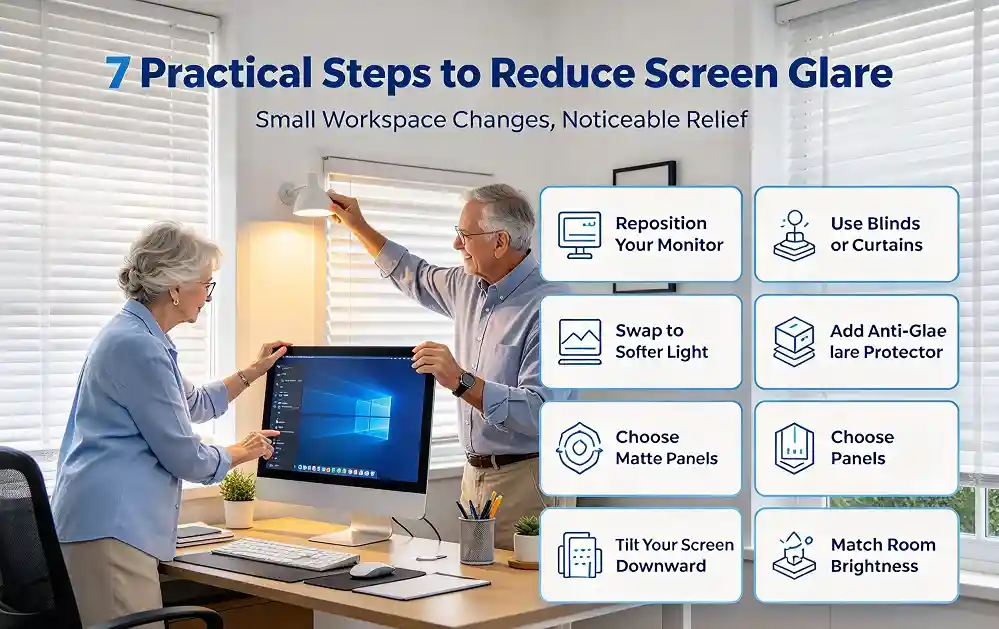
7 Practical Steps To Reduce Screen Glare & Prevent Glare Eye Strain
- Reposition your monitor away from direct window light
- Use blinds or curtains to soften natural daylight
- Swap bright overhead lights for softer indirect lighting
- Apply an anti-glare screen protector for glossy displays
- Matte monitor panels cut sharp reflections better than glossy screens
- Tilt your screen slightly downward to avoid overhead light bounce
- Adjust room brightness so your screen does not stand out as overly bright
Small workspace changes often deliver the biggest reduction in reflective glare and associated eye discomfort.
Relieve Eye Muscle Tension Caused By Screen Glare
Even after fixing glare, your eye muscles may still hold residual tension from hours of subtle adjustment. Our ∞ Figure Eight Ocular Muscle Trainer releases tension in muscles used for constant fine gaze adjustment, while Near-Far Ocular Accommodation Trainer restores ciliary muscle flexibility to ease these fatigue symptoms.
Students learning online can also reduce glare-related fatigue with the tips from our student eye strain article.

It is wise to check your workspace lighting every few months, especially if you rearrange furniture or change the position of your desk near windows.
FAQ About Screen Glare Eye Strain
Does screen glare cause eye strain?
Yes. Screen glare is a major trigger of glare-induced eye fatigue. Reflected light forces your eyes to constantly compensate, exhausting eye muscles and triggering headaches and soreness.
How do I stop eye strain from screen glare?
Adjust screen placement, use window coverings, add anti-glare filters, and complete short eye muscle training after screen time to ease fatigue caused by display reflections.
Disclaimer
Eye training aids help relax fatigued eye muscles. They do not treat eye disease. Seek professional eye care if glare continues to trigger severe headaches or vision discomfort.