
If you spend hours every day staring at a computer, tablet or phone, you may wonder: What is the 20-20-20 rule for eyes? This simple screen-break habit is one of the most recommended ways to fight digital eye strain — yet most people either forget it or do it wrong.
The American Optometric Association AOA lists regular visual breaks as a first-line strategy against computer vision syndrome. In this complete guide, we break down exactly what the 20-20-20 rule for digital eye strain is, why it works, how to do it properly, and what it cannot do on its own.
What Is the 20-20-20 Rule for Eyes
The 20-20-20 rule is a simple screen-break routine designed to relax the eyes after prolonged near-focus work. The 20-20-20 rule for digital eye strain follows this easy principle:
- Every 20 minutes — stop looking at your screen
- Look at something at least 20 feet (about 6 meters) away
- Keep that distant gaze for at least 20 seconds
That is it. No equipment, no app, no cost. The idea is to give the ciliary muscle a short period of rest from near focusing, similar to how you would stretch a tight muscle after holding one posture too long.

Table of Contents
Why Does the 20-20-20 Rule Help With Digital Eye Strain?
When you read or work on a screen, your eyes stay locked in near-focus mode. The ciliary muscle inside each eye contracts continuously to keep near objects in focus. Over hours, this sustained contraction leads to eye fatigue, blurred near-to-far transitions, and headaches. Following the 20-20-20 rule for digital eye strain interrupts this constant contraction.
Looking 20 feet away forces the ciliary muscle to relax. After 20 seconds, the muscle begins to release its tension, and your eyes feel noticeably more comfortable when you return to the screen.
Bonus: Blink More During the Break
Staring at a screen also cuts your blink rate by about half. During each 20-second break, make a conscious effort to blink fully several times. This replenishes the tear film and reduces dry eye symptoms that often come with long screen sessions.
How to Actually Stick to the 20-20-20 Rule
The hardest part is remembering. Here are practical ways to build the habit:
- Set a quiet timer or calendar reminder every 20 minutes (mute it so it does not break your focus too much)
- Position your screen so a window, wall or distant object is visible just beyond it
- Use browser extensions or system notifications that nudge you to look away
- Pair the break with a habitual action — for example, after you finish replying to an email, look away for 20 seconds
- For students: do one 20-20-20 break between every online class session
Common Mistakes That Make the 20-20-20 Rule Less Effective
Mistake 1: Looking at a Phone or Another Screen
Checking your phone during a “break” keeps your eyes in near-focus mode. You are not giving the ciliary muscle any rest at all. The break must involve real distance — 20 feet or more.
Mistake 2: Looking Away for Only 2 or 3 Seconds
The ciliary muscle needs time to release tension. A quick glance is not enough. Aim for the full 20 seconds — it is shorter than it sounds.
Mistake 3: Only Doing It Once or Twice a Day
The 20-20-20 rule works best as a repeating cycle throughout the workday. A single midday break does not undo eight hours of continuous near-focus.
Mistake 4: Blaming the Rule for Persistent Symptoms
If you follow the rule correctly but still have daily headaches, blurred vision or eye pain, the issue may be prescription-related, dry eye, or another condition that requires an eye exam. The rule is a prevention habit, not a treatment.
What the 20-20-20 Rule Cannot Do
While the 20-20-20 rule is a valuable daily habit, it has limits:
- It does not correct or prevent myopia in children or adults
- It cannot replace a comprehensive eye exam if symptoms persist
- It does not address extraocular muscle stiffness from fixed screen gaze — for that, gentle eye movement exercises help
- It does not filter blue light; for that topic, read our guide on blue light glasses for digital eye strain
Combine Breaks With Active Eye Muscle Training
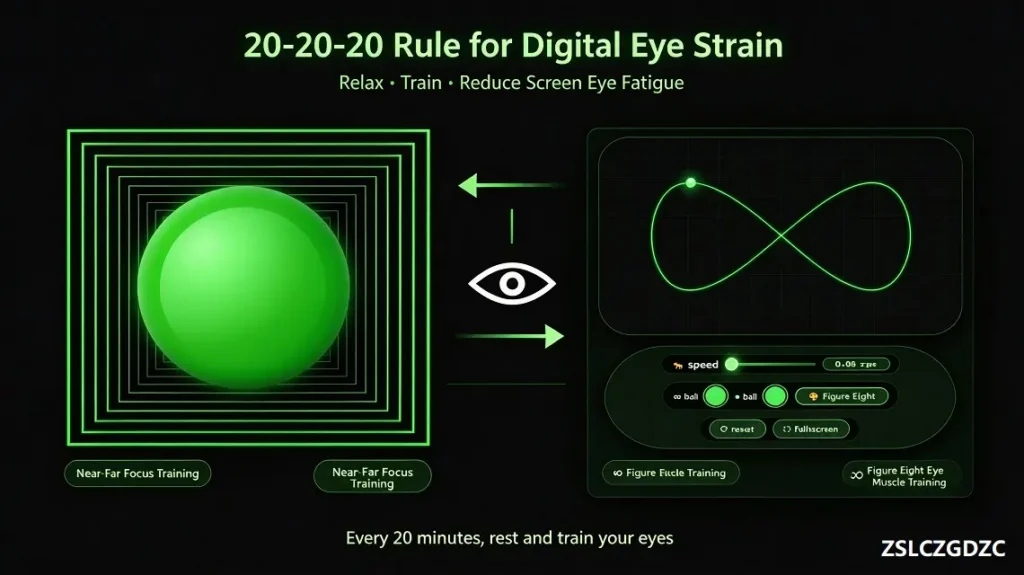
The 20-20-20 rule is a passive rest technique. For more complete relief, pair it with short, active eye muscle training sessions once or twice a day. Our web-based trainers are designed for this:
- Near-Far Ocular Accommodation Trainer — actively guides the ciliary muscle through near and far focus cycles
- ∞ Figure Eight Ocular Muscle Trainer — loosens stiff extraocular muscles with smooth eye movement patterns
Together, regular 20-20-20 breaks and short active training sessions cover both passive relaxation and active muscle conditioning — a more complete approach than either method alone.
Who Should Follow the 20-20-20 Rule?
The rule is suitable for almost anyone who uses screens for extended periods:
- Remote and office workers — see our 5-minute eye training routine for remote workers
- Students doing online classes and homework — see our guide on digital eye strain for students
- Gamers and anyone who spends long sessions on a monitor
Frequently Asked Questions
How long do I need to look away for the 20-20-20 rule?
At least 20 seconds. The ciliary muscle needs that window to begin releasing sustained near-focus tension. Twenty seconds is short enough to fit into a normal workflow but long enough to make a difference.
Does the 20-20-20 rule actually work?
Yes, as a preventive habit. Regular visual breaks reduce the intensity of digital eye strain symptoms for most screen users. It will not cure underlying vision problems, but it is one of the simplest evidence-backed steps you can take daily.
Can the 20-20-20 rule prevent myopia?
No. Myopia progression is driven by genetic and environmental factors and requires clinical management. The 20-20-20 rule addresses eye fatigue, not myopia control.
Do children need to follow the 20-20-20 rule?
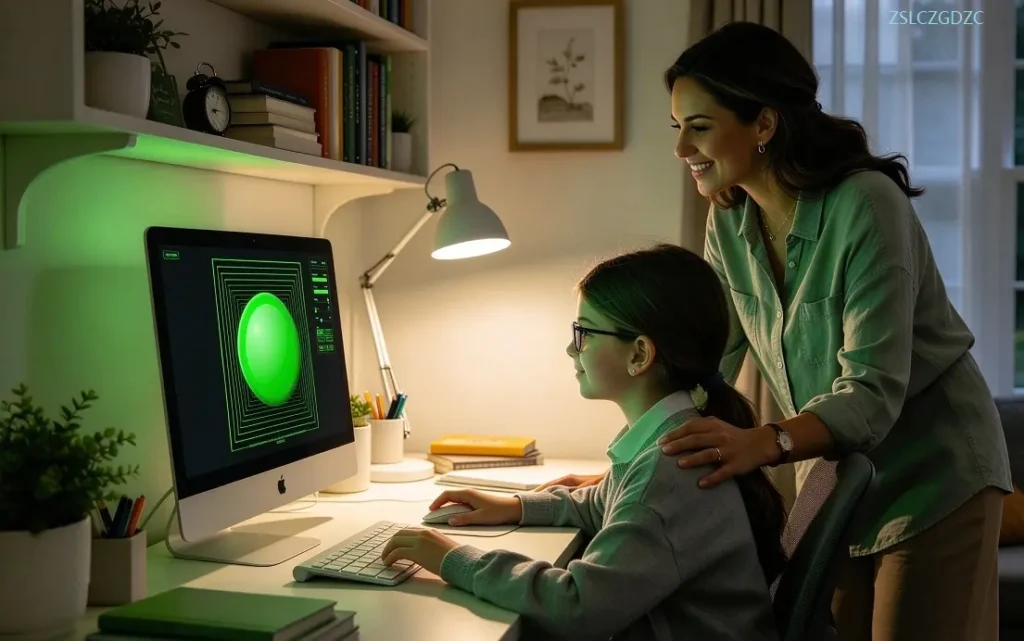
Yes. Children and teenagers on screens for school or leisure benefit from the same breaks. Parents can set the timer and remind younger kids to look away — building the habit early helps throughout school and working life.
Final Thoughts
The 20-20-20 rule for digital eye strain is simple, free and backed by eye care professionals. It will not solve every screen-related eye problem, and it cannot replace professional exams or prescribed treatment. But as a daily habit, it is one of the most reliable first steps toward more comfortable vision during long screen hours.
Pair it with good screen posture, proper lighting, and gentle eye muscle training — and you have a complete, low-effort eye care routine you can start today.
Related Digital Eye‑Strain Guides
- From a Parent’s Clinic Visit to Accessible At‑Home Eye Care Revolution
- Complete beginner guide to the 20‑20‑20 rule for eye fatigue relief
- Our origin story: building accessible web‑based eye wellness tools
- How to upgrade your 20‑20‑20 breaks with active eye‑muscle training
- 5‑minute daily eye‑care routine designed for remote home‑office workers
- Two science‑backed browser‑based exercises to ease screen‑related eye strain
- Do blue‑light glasses actually reduce digital eye‑strain symptoms?
- Safe short eye‑training routine for students dealing with school screen fatigue
- Why you get heavy, tired eyes after long screen sessions and quick relief tips
- Near‑far focus training for releasing tight ciliary eye‑muscle tension
- Temporary blurry vision after computer use: common causes and practical fixes
- 7 actionable tips for eliminating screen‑glare‑triggered eye fatigue
- Practical eye‑care advice and quick reset routines for gaming‑related eye strain
- Why dim screen brightness may worsen, rather than ease, your eye discomfort
- Proven methods to relax overworked eye muscles following long screen exposure
- How infinity‑pattern figure‑eight ocular training relieves stiff extraocular muscles
Disclaimer
This article is for educational purposes only and does not replace professional eye care. If you experience persistent eye pain, blurred vision, double vision or vision changes, please consult a licensed optometrist or ophthalmologist for examination and diagnosis.
[…] this routine with the 20-20-20 rule throughout your day to prevent tension building […]
[…] this training with the 20-20-20 rule throughout your workday to stop tension from building up in the first place. Every 20 minutes, look […]
[…] Complete beginner guide to the 20‑20‑20 rule for eye fatigue relief […]
[…] the 20-20-20 break rule: Every 20 minutes of reading, look at objects 20 feet away for 20 seconds to relax contracted […]
[…] well-known 20-20-20 rule is a great start, but many families find it hard to stick to. That is exactly the gap our two […]